Straight answers before you book anything: who can learn, how long it takes, what it costs, and what the first lesson actually feels like.
The honest answer
Kitesurfing looks extreme from the beach. In a shallow lagoon with an instructor on the radio, it is a step-by-step skill like skiing or diving. You do not need to be strong — the harness takes the pull, not your arms. You need reasonable swimming confidence, and teenagers from about 10 and up can learn alongside adults.
What actually matters is patience: the kite comes first, the board comes later, and people who accept that order learn fastest.
Timeline
Most complete beginners need 6 to 9 hours of instruction over 3 to 5 days to reach their first independent rides. Here is the honest progression:
| Stage | Typically | What happens |
|---|---|---|
| 1. Safety and wind theory | First hour | How the wind window works, safety systems, spot awareness |
| 2. Kite control on land and water | Hours 1–3 | Flying the trainer and full kite until steering is instinct |
| 3. Body dragging | Hours 3–5 | Using the kite to move through water — and recover your board |
| 4. Water starts | Hours 5–8 | Board on feet, first rides of a few metres, then longer |
| 5. Independent riding | Hours 8–12 | Riding both directions, staying upwind, self-rescue — IKO Level 3 |
A 3-day trip can get most people riding; 5 days makes it stick. Some need a few hours more — normal, not failure. See lesson options and prices.
Day one
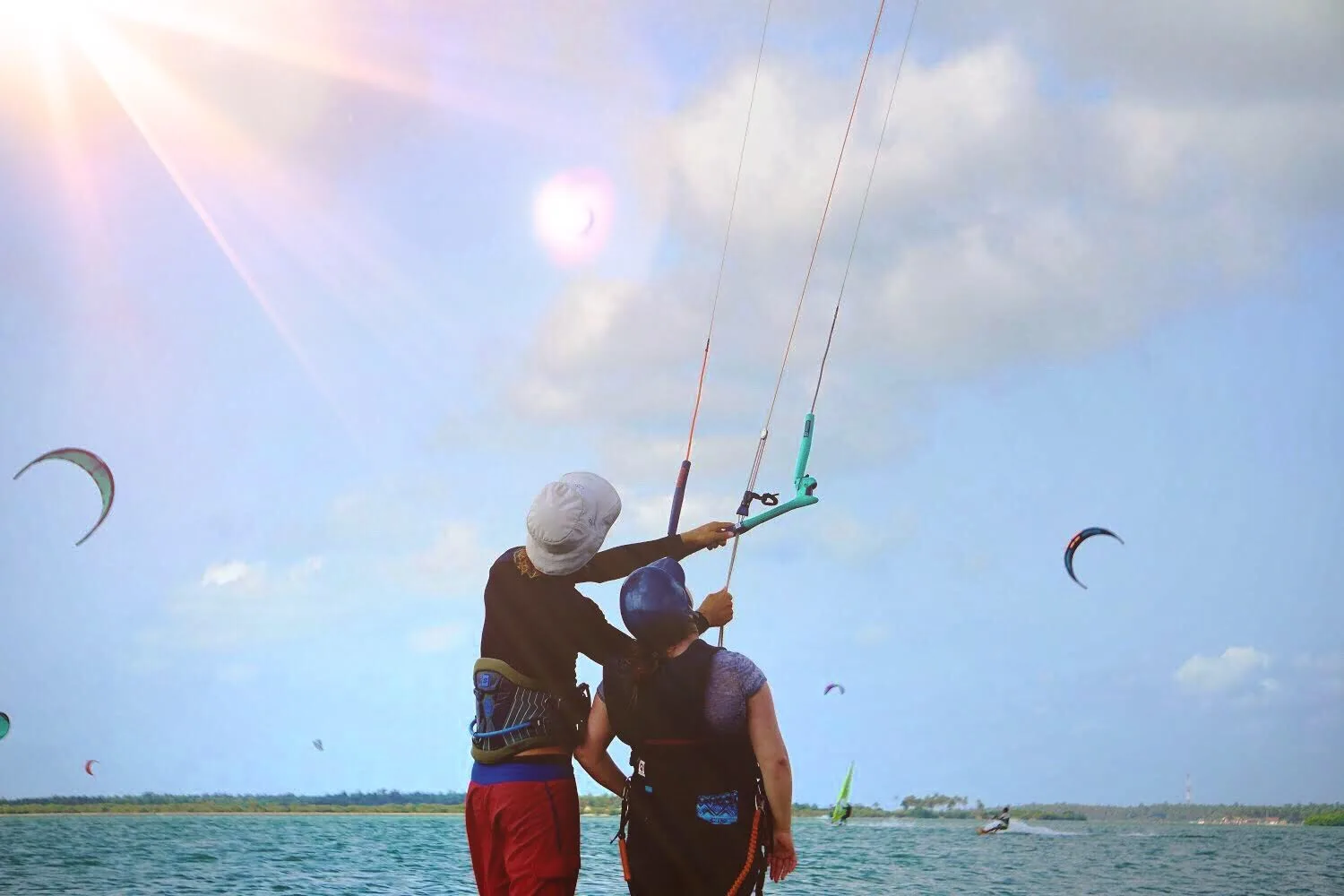
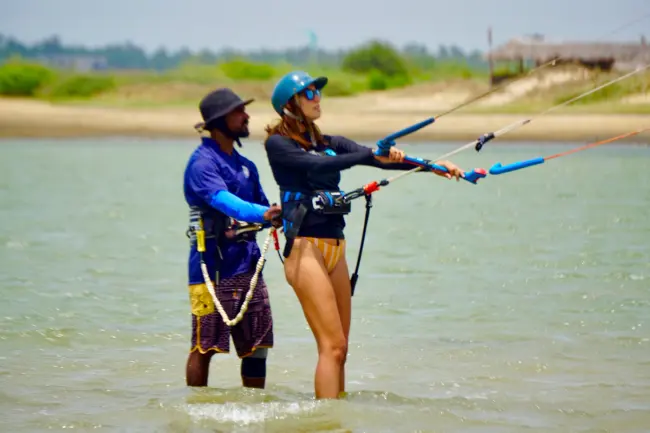
No board, and that is deliberate. You will meet your instructor, walk through the wind window and safety releases on the beach, then fly the kite — first small, then full size — until steering stops needing thought. Most people are body dragging through the water by the end of a first 2–3 hour session, grinning and tired in the good way.
Wear swimwear and sunscreen; we provide everything else, including the helmet with radio so your instructor's voice is in your ear the whole time.
See the full beginner courseMoney
Sri Lanka is one of the most affordable places in the world to learn properly. At Valampuri, private lessons are €50/hour, group lessons €35/hour per person, and the full 9-hour IKO course is €390 — roughly half what equivalent instruction costs in Europe (Tarifa ~€80/hr, Greece ~€85/hr, Dubai ~$100/hr).
Packages bundle the course with a room and half board from €245 pp (two sharing) — see packages.
Where
You can find lessons at several places around Sri Lanka, but Kalpitiya's lagoon is why the sport lives here: flat, shallow, steady wind in two seasons, and space to learn without dodging swimmers or waves. Read the full Kalpitiya guide and the season guide to pick your window.
Ask a beginner questionCommon worries
Taught properly, in the right conditions, it is far safer than its reputation. The risks come from skipping instruction or riding in the wrong conditions. Shallow water, radio coaching, modern safety releases and rescue boat cover remove most of the ways beginners get into trouble.
We regularly teach students in their 50s and 60s. The harness takes the kite's pull, so it is about technique and patience, not strength. If you can swim confidently and handle a beach walk in the sun, you can learn.
You can book a single private hour (€50) as a taster before committing to the full course. Most people who try the taster continue — but there is no pressure and no package lock-in.
Swimwear, high-SPF sunscreen, sunglasses with a strap if you have them, and a rash vest or t-shirt you don't mind getting wet. All kite equipment, helmets and vests are provided.
Send us your dates — we will tell you honestly whether the season fits and which course to start with.
Start the conversation