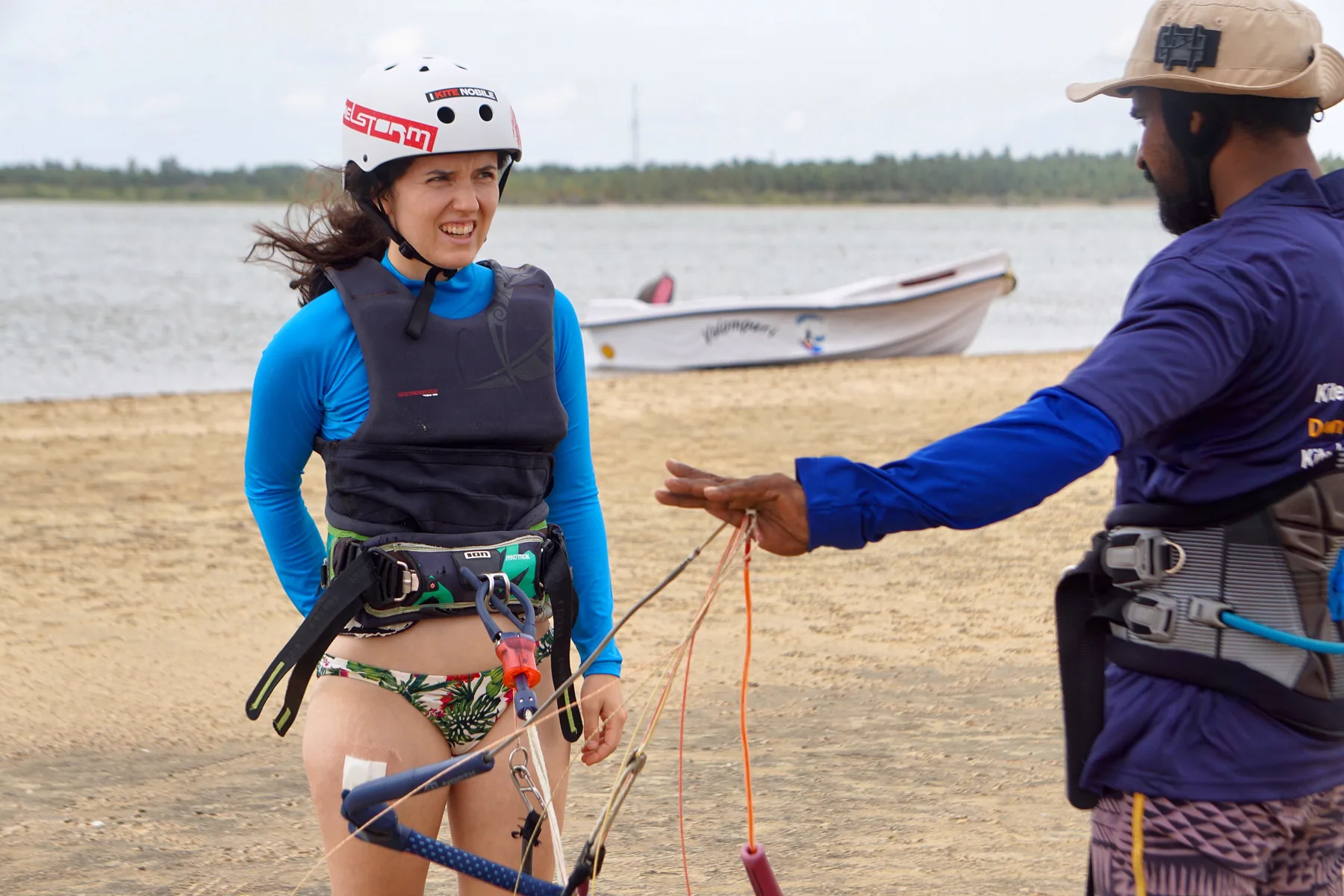
A Valampuri instructor coaching a helmeted beginner on the beach at Kalpitiya

How to Learn Kitesurfing

Everything a complete beginner actually wants to know — answered honestly, before you book a thing.

Start here

Learning to kitesurf is simpler than it looks

From the beach it can look like chaos and adrenaline. Up close it is a set of small, teachable steps: fly the kite, feel its power, drag through the water, then stand up. Take them in order, in the right conditions, and most people are riding on their own within a few days. This page walks through each question beginners ask us most.

The learning curve

Is kitesurfing difficult to learn?

Honestly? The first two or three hours are the hardest, and after that it gets steadily easier. The challenge is not physical strength — it is coordination. You are learning to steer a powerful kite with small, calm hand movements while your body does something else entirely.

What makes it feel difficult is usually the environment, not the sport. Gusty wind, deep water and crowded beaches turn small mistakes into big ones. Kalpitiya's flat, waist-deep lagoon removes most of that pressure, so you can make the normal beginner errors safely and keep progressing instead of getting scared off.

The people who struggle most are the ones who try to skip the kite-control stage and rush to the board. Build the foundation properly and the difficult part is mostly behind you by the end of day one.

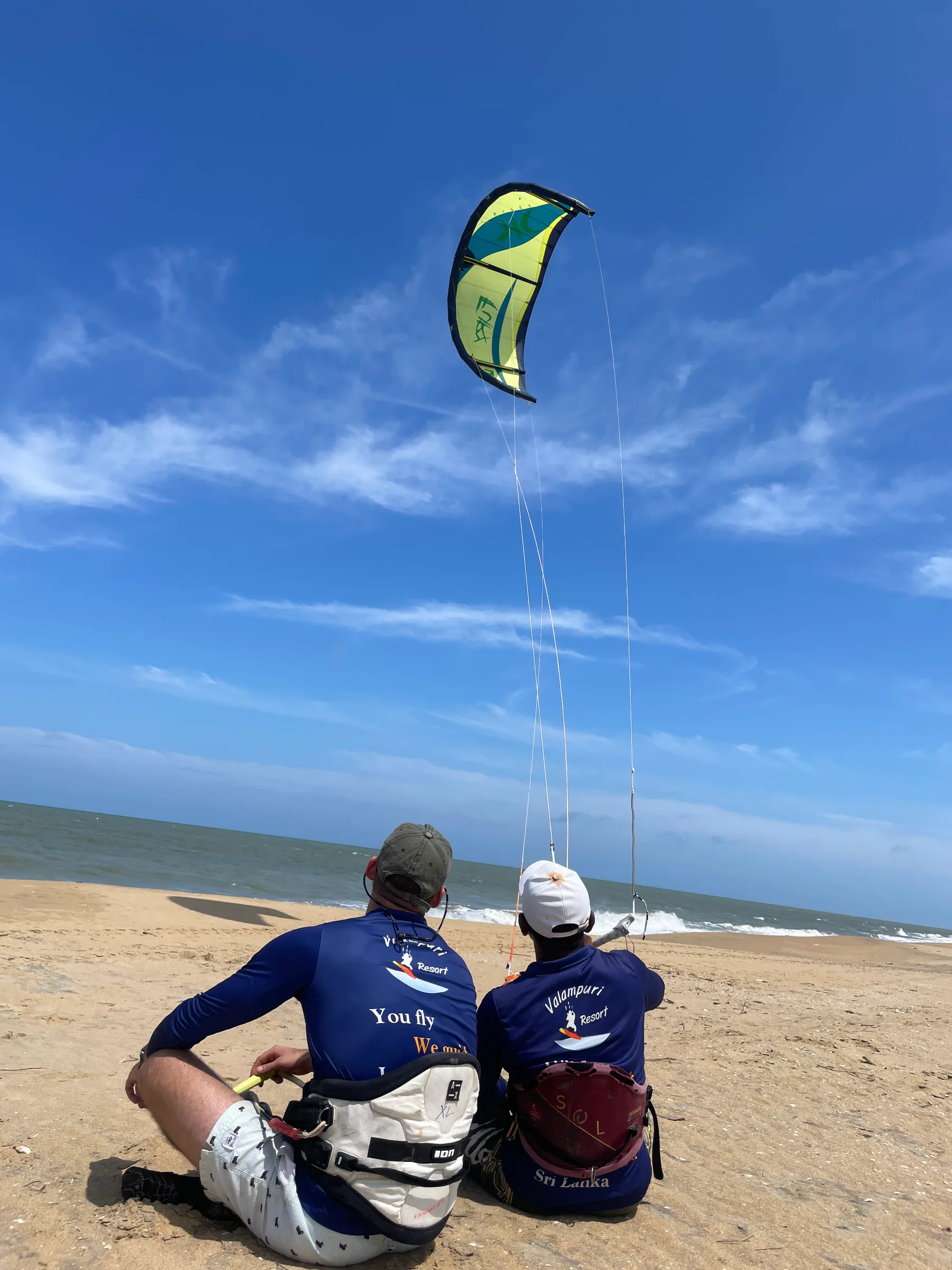
Valampuri instructor and student sitting on the beach watching a kite fly, learning kite control at Kalpitiya

Lesson one

What happens in your first lesson

Your first session is calmer than you expect. Most of it is on land or in shallow water, building control before power. Here is the usual shape of it.

  1. 1

    Meet and safety brief (on land)

    You meet your instructor, we talk through the wind, the safety systems and how the radio helmet works. Nothing on the water yet.

  2. 2

    Kite setup and the wind window

    You learn to rig and launch, and to read where the kite has power and where it sits calm. This is the foundation for everything after.

  3. 3

    Kite control with a trainer kite

    You fly a small kite first, feeling the pull and learning to steer smoothly before there is any real power in your hands.

  4. 4

    Into the water — body dragging

    On a full kite in waist-deep water, you learn to control power, self-rescue and drag yourself through the water. This is a whole session on its own.

See full lesson options and prices

Choosing a format

Private vs group lessons

Both work. It comes down to how fast you want to progress and who you are travelling with.

Private lessons

One instructor, one student, full attention on you. You get the most water time per hour and the fastest progress, because nobody is sharing the kite or waiting their turn.

  • Fastest route to independent riding
  • Lessons paced entirely to you
  • Best for solo travellers in a hurry

Group & semi-private lessons

Two students share one instructor and rotate on the gear. It is more sociable and easier on the budget, with a little less water time each. Ideal for couples or friends learning together at a similar pace.

  • Lower cost per person
  • Learn alongside your partner or friend
  • Rest while the other rides
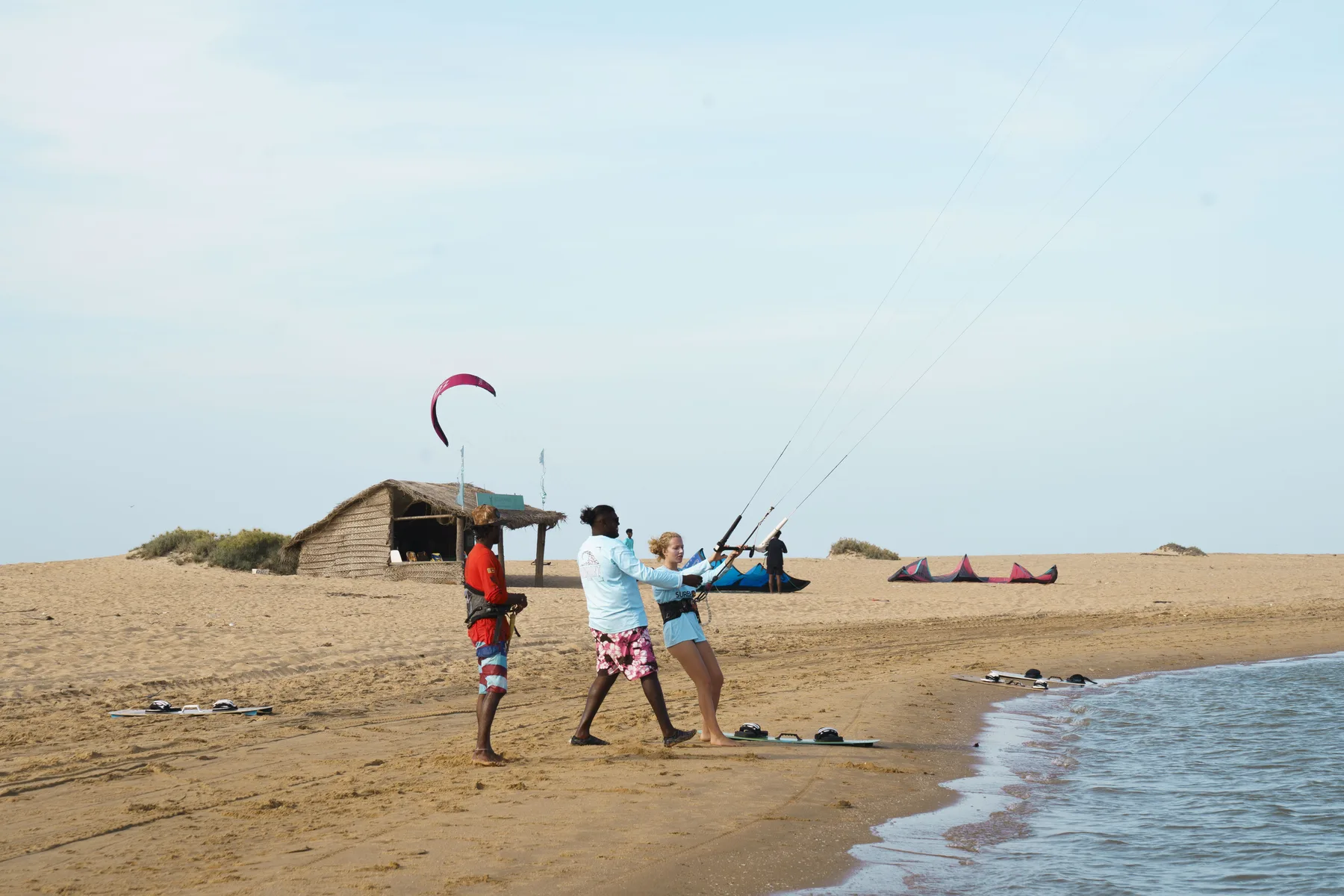
Two instructors coaching a beginner at the water's edge in Kalpitiya, boards and kites ready on the sand

Before you arrive

How to prepare for your course

You do not need to train for this, but a few simple things make every hour on the water count for more.

  • Get comfortable in open water — a few swims in the weeks before helps more than any gym session
  • Bring reef-safe sun cream, a rash vest and a cap; the Kalpitiya sun is stronger than it feels on the water
  • Book enough days that a low-wind day or two will not cost you the whole course
  • Watch a beginner kite-control video or two so the terms feel familiar, then let your coach do the real teaching
  • Bring a strap for glasses or sunglasses, and consider contact lenses for lessons
See the full packing guide

Learn faster

Common beginner mistakes

None of these are a big deal with a coach beside you — but knowing them helps you understand what your instructor is working on.

Watching the kite instead of the water

The fix: We train your hands to feel the kite so your eyes stay free — it changes everything.

Gripping the bar too hard

The fix: Light hands give smoother control. Your coach spots this within minutes and corrects it.

Trying to stand up too early

The fix: Solid body dragging comes first. Rush the board and you fight the kite; build the base and the board start comes easily.

Learning in the wrong conditions

The fix: Gusty, offshore or crowded spots punish beginners. Flat lagoon water in steady wind removes most of the difficulty.

Questions

Before you start

Do I need to be fit or a strong swimmer?

You need to be comfortable in waist-to-chest-deep water and able to swim a short distance, but kitesurfing is not about strength — the harness takes the pull, not your arms. Reasonable general fitness is plenty for a beginner course.

What age can start learning?

We teach from around 12 years old upward, with the right conditions and kite sizes, and there is no upper limit. Riders in their fifties and sixties learn here regularly. What matters is confidence in the water, not age.

Can I learn if I have never done any board sport?

Yes. Plenty of our students have never surfed, snowboarded or wakeboarded. The kite control comes first and is its own skill; board riding builds on top of it once the kite feels natural.

Will one lesson be enough to try it?

A single session is a great taster and you will fly a kite and do some body dragging, but you will not be riding a board yet. To reach independent riding, plan for a full beginner course of around 9 to 12 hours.

Ready to take your first lesson?

Tell us your dates and experience level. We reply with availability, an honest course recommendation and a full price — no deposit to ask.

Check availability
Check availability